
In conversation with Clare Binns, managing director of Picturehouse Cinemas, at the Edinburgh Film Festival’s inaugural UK Film Conference BFI CEO Ben Roberts was candid from the outset about the problems of working for a major public-funding body. Having previously worked for numerous UK distribution and sales outfits, Roberts admitted that he had been warned against taking the job as Director of the BFI Film Fund in 2012. “Various people said to me, ‘Everyone will hate you and you’ll never work again,’” he laughed. “So, there was definitely that sense going in — that these jobs are quite challenging, because you can make a lot of enemies. The fact is you turn most people down in that job. You just do, because the numbers are stacked against you.”
Roberts now has more than just the Film Fund at his disposal, dispensing sums in the region of £150 million in a three-year cycle, and, in his interview, he outlined a case for a future of British film that would include the whole process, from script to screen — which includes supporting exhibition, distribution, archival work, festivals and education. “The BFI does a unique job of having some money to support filmmakers,” he said, “which can be very easily [measured]: Yes or no. Yes, you got it. No, you didn’t get it. But there are so many other things that the BFI does to try to make the conditions for making and releasing films in the UK possible.”
Roberts conceded that the BFI system can seem like a bureaucracy but defended the amount of paperwork. “It’s lottery money,” he said, “so you have to run everything in a very open way. We’re different to the BBC or Film4 in the fact that we can’t have a conversation with one of you in this room, and when you tell me about your project — and we like the sound of it — say, ‘Come in for a meeting, let’s give you some money.’ We can’t work like that because we have to run an open process. And then, within that, we establish some goals about what we might be looking for.” (In a shorter version of this comment, Roberts quipped, “Look, everyone has to fill out a form. Get over it!”)
Another preconception about the BFI, he said, is that it favors worthy projects that tick politically correct boxes. “Principally, you’re looking for something that feels worthy of ‘good cause’ money, because national lottery money is ‘good cause’ money. So, you’re looking for something that really needs that money — something that the market is probably not going to obviously fund, but that’s still pretty broad. And then there’s obviously, as there should be, a qualitative assessment as well. Is it good? Does it read well? Is the team that’s making it — even if they’re early in their career — clear on what they want to achieve? Have they made anything that would suggest that raw talent is there? An old colleague of mine, when I first joined the film fund said, ‘It’s not social work.’ Which is really important, actually, because it’s not social work.”
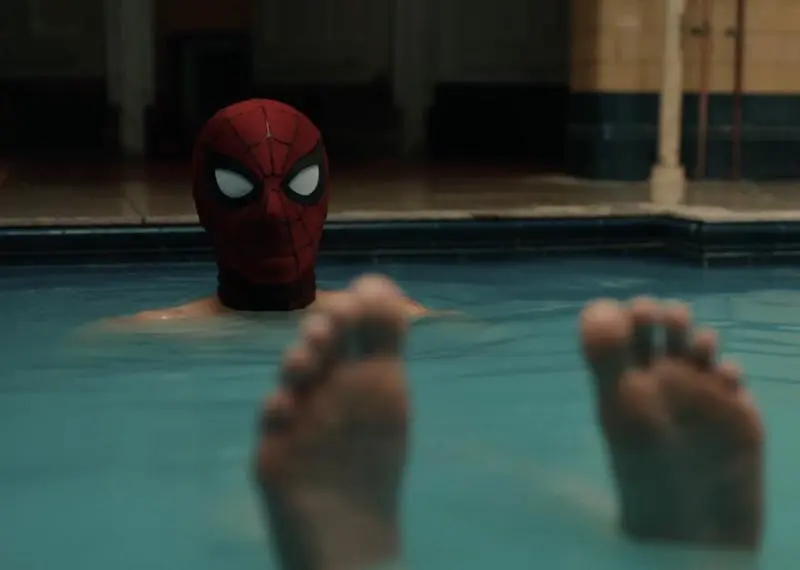
On the subject of artistic quality, Roberts also suggested that the metric for success should not be limited to two of the most common, which tend to prioritize the role of the director and the importance of box-office. “You could have a film that might not make money, but an actor in that film might be identified. We often sometimes forget to talk about the actors that have been discovered, or platformed, through lottery funded or publicly funded films and gone on to be huge stars. Tom Holland’s second film was How I Live Now, directed by the great Kevin McDonald and was funded with lottery money. And that was putting him on a particular path. Olivia Colman’s first standout work that moved her from sketch comedy to dramatic feature film was Paddy Considine’s Tyrannosaur. So, I think there are many markers of success in a film.”
Warming to his theme, Roberts pushed back at the sometimes-combative relationship between artists and those dishing out public funds. “I do think I should be given a hard time,” he said. “But it’s a two-way street. We get quite frustrated by the quality of original thought sometimes, original ideas. And there is plenty of opportunity for filmmakers to start to demonstrate their original thoughts and their skills without needing to wait for the very highly prized and highly won lottery money… I think it can be a misconception that a lot of money needs to be spent in order to create something that’s got value.”
He did concede, however, that “there are some things I think we haven’t been great at in the UK as an independent sector. For instance, I don’t think we’re great at comedy. Obviously, the Edinburgh Film Festival opened with a really strong, lottery-backed comedy this year, The Incomer. I’m not saying we don’t do it, but I think it takes real skill to do it well. We know audiences love horror, and I think that we pull our punches sometimes in horror, as well as comedy, in independent film. Someone said to me recently, ‘I’ve got a horror project.’ I said, ‘Is it scary?’ He said, ‘It’s more of a mood.’ But we don’t want mood. Go for it. Go for it a little bit more. There are a few areas where sometimes we sort of polish off the edges of genres that punch through a bit harder.”
Both Binns and Roberts commented on the recent renaissance of cinemagoing among young people, as well as an uptick in attendances since Covid, but Roberts was particularly keen to get to potential audiences as soon as possible. “There are lots of ways that we try to open up pathways for young people,” he said. “But the missing piece — and it’s really, really important — is having film firmly in the classroom. I mean, teaching film as a storytelling medium, particularly a time when — on a sort of crude level — I would say that watching is the new reading for a lot of people. So, how you develop really good interpretation skills, literacy skills, how you can create your own communication channels healthily and creatively is really important right now.”
Hayden Panettiere poses nearly naked in bathtub in ‘tearful’ final campaign before her death
Hayden Panettiere appears almost naked in a bathtub for an emotional PETA campaign filmed weeks before her death at the age of 36.
The Heroes and Nashville star died in Greenville, South Carolina, on Sunday. First responders could not revive her after attending the property. Authorities are still investigating Hayden’s death, with no official cause confirmed.
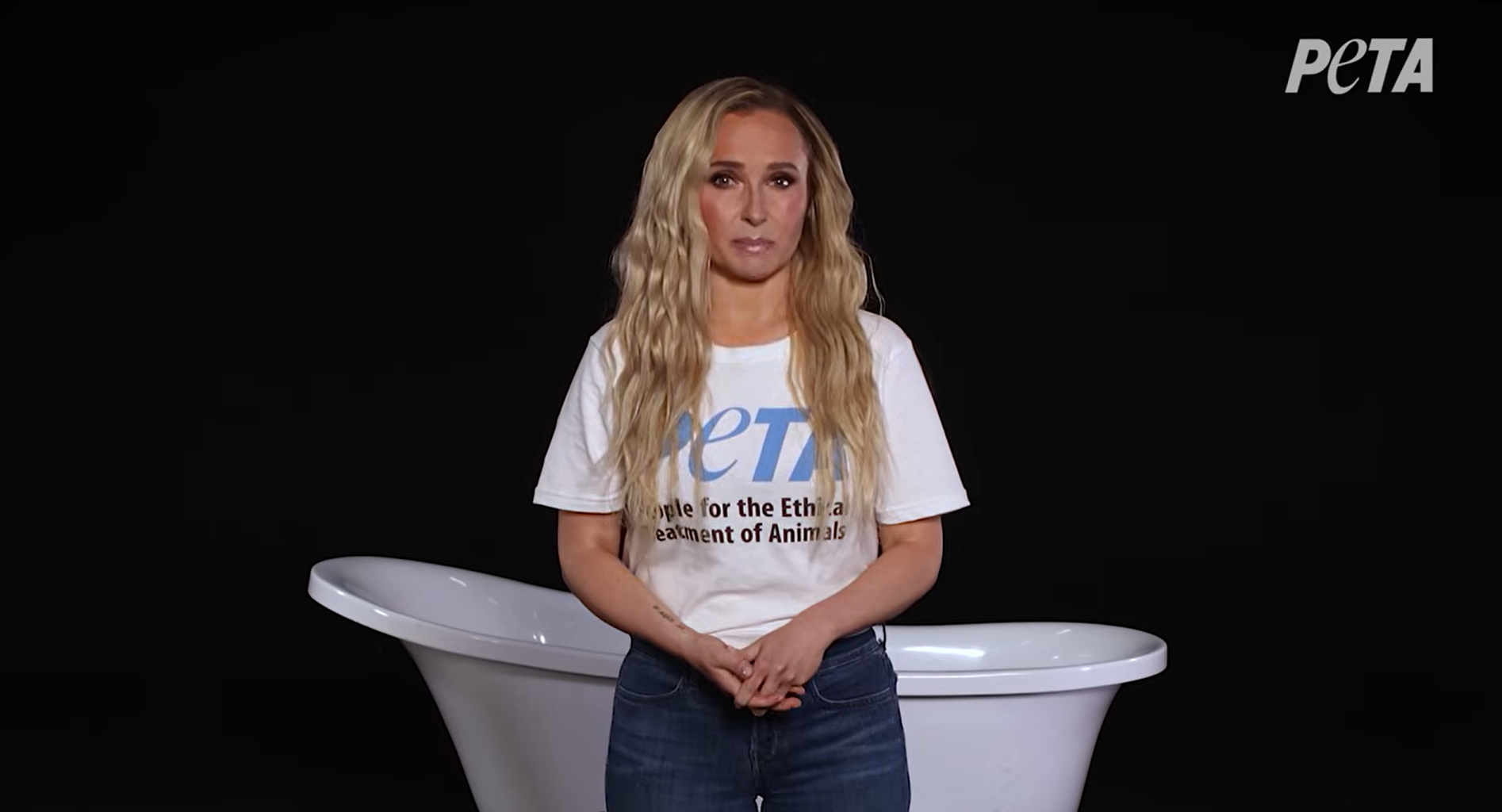
PETA released the finished campaign on Tuesday. In the video, Hayden uses the confined space of a bathtub to illustrate the conditions dolphins and whales face in marine amusement parks.
The newly released PETA film provides a glimpse of Hayden in one of her final campaigns, using her public profile to support a cause she had championed since her teenage years.

One of Hayden Panettiere’s final campaigns for PETA
In the campaign video, Hayden looks directly at the camera as she says: “Imagine spending your entire life in a bathtub. That’s what it’s like for dolphins and whales in tiny tanks at marine amusement parks.”
The actress then asks viewers to consider how captivity may affect the animals. She says: “Can you imagine their frustration, their trauma, their depression? All that’s important and crucial for their well-being is ripped away.”
Hayden also tells viewers: “We can end this. You and me.”
She concludes the video: “Together, we can end this cruelty. Thank you.”
Read more: Hayden Panettiere’s mother lashes out at her on-off boyfriend in statement after her death at 36
Her work for marine animals stretched back almost two decades. In 2007, Hayden joined activists confronting dolphin hunters off the coast of Taiji in Japan. The events featured in the 2009 documentary The Cove, which won the Oscar for best documentary feature.
She also worked with the Whaleman Foundation and regularly spoke out against marine mammal captivity.
PETA pays tribute to Hayden Panettiere
A PETA representative told Page Six that the campaign shoot took place on July 22. The representative also described Hayden as “wonderful” on set.
PETA senior vice president Lisa Lange later honoured the actress in a statement. She said: “Hayden Panettiere became a household name playing a hero on TV, but to animals, she was the real deal.”
Lange added: “The world has lost a kind soul and the animals a fierce ally, and everyone at PETA holds her memory close.”
The charity described the video as Hayden’s “last act of kindness” and released it as a tribute to her years of animal welfare work.
Hayden Panettiere’s cause of death remains unconfirmed
Authorities have not established Hayden’s official cause of death. TMZ reported that a 911 call referenced a possible overdose and cardiac arrest, but toxicology findings remain outstanding.
Officials said an autopsy found “no signs of trauma” that would have contributed to her death.
So what do you think of this story? You can leave us a comment on our Facebook page @EntertainmentDailyFix and let us know.


Be the first to comment on this article!